Siem Reap is one of the Cambodia’s most visited places, providing a soft landing for visitors who flock to the UNESCO-listed temples in the Angkor Archaeological Park each year. While most of the best things to do in Siem Reap revolve around the temples—and for good reason—this historical rural village-turned-travel-epicenter has plenty of its own charms, too, from vibrant markets and bustling Pub street to the phenomenal Phare Circus and serene spas. Outside of Siem Reap, you’ll also find lush rice paddies, floating villages, and various activities perfect for day or half-day.
1-Angkor Wat
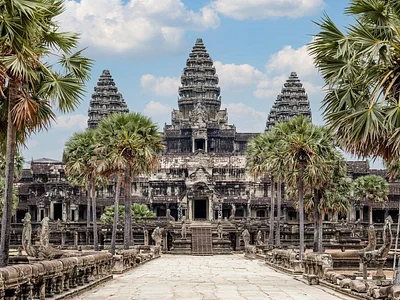
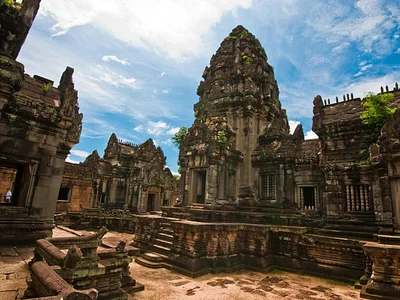
Rising from the jungle as the star of the UNESCO World Heritage Site Angkor Archaeological Park, the Angkor Wat temple complex is a 12th-century engineering marvel. Look out for intricate carvings of nymphs dancing on columns in shadowy hallways, serpent-topped balustrades, and huge, chiseled bas-reliefs depicting Khmer Empire battles. Although intended as a microcosm of the universe, it’s difficult to get lost here, with the complex arranged on three easy-to-navigate tiers.
2-Bayon
The geographical and spiritual center of the ancient city of Angkor Thom, the Bayon is one of the crowning artistic achievements of the Khmer king Jayavarman VII. Around 200 giant faces look down from around 50 towers, while beautifully crafted reliefs depict everyday life in 12th-century Cambodia.
3- Banteay Srei
Small but perfectly formed, the delicately carved rose pink temple of Banteay Srei is a masterpiece of Angkorian art. The name means “Citadel of the Women,” likely because of its many carvings of “apsara” nymphs. First built in 967AD, long before Angkor Wat or Angkor Thom, it’s about an hour’s drive from the main archaeological area.
4- Phnom Bakheng
Topped by Bakheng—one of the earliest temples in the Angkor area—Phnom Bakheng (Bakheng Hill offers spectacular sunset views over Angkor Wat. Built around the year 900 AD, Bakheng temple ascends in five separate tiers, and its many towers reflect Hindu cosmology.
5- Angkor Thom
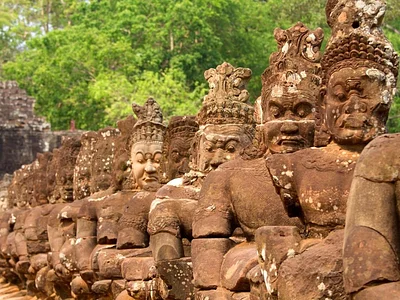
The sprawling temple complex of Angkor Thom, an ancient Khmer capital formerly ringed by a crocodile-infested moat, surpasses the world-famous Angkor Wat in both size and scale. Each of the site’s five gates are heralded by avenues lined with 108 deities that represent good and evil, which provide spectacular photo opportunities before you even step inside.
6- Ta Prohm
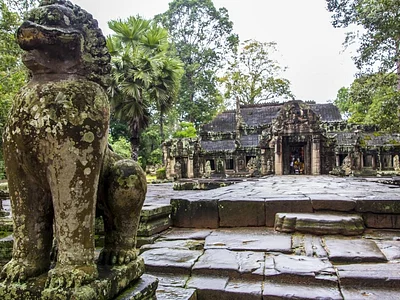
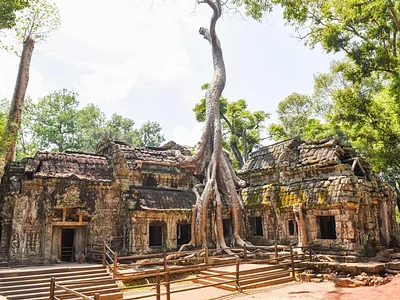
Explored by Angelina Jolie in 2001’s Lara Croft:Tomb Raider, Ta Prohm is ubiquitously known as “the Tomb Raider temple.” A 12th-century Buddhist monastery and temple complex enmeshed in a web of towering tree roots, it’s one of Angkor’s—and Cambodia’s—signature sights and stands as an eerie symbol of the transience of human endeavor.
7- Terrace of the Elephants
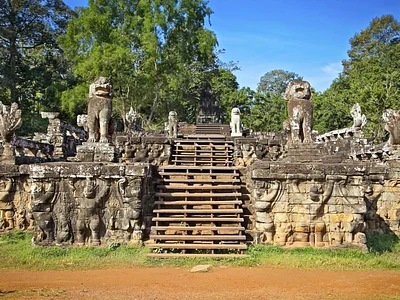
Located within the ancient walled city of Angkor Thom and part of the Angkor temples UNESCO World Heritage Site, the Terrace of the Elephants is renowned for its exquisite stone carvings. Built at the end of the 12th century by King Jayavarman VII, the temple takes its name from the depictions of parading elephants that adorn the terrace walls.
8- Beng Mealea
Said to date back to the 12th century, Beng Mealea is a sandstone temple that replicates the design of the iconic Angkor Wat. The temple grounds are surrounded by a gigantic moat that was once entirely consumed by jungle; if you enter from the south side, you’ll find yourself amid haphazard sandstone blocks and creeping vines.
9- Preah Khan
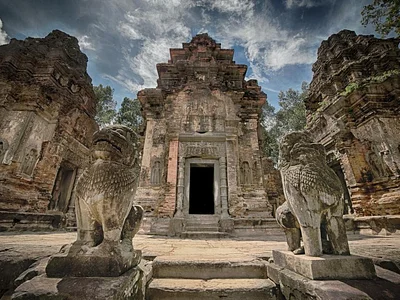
At the northern end of the Angkor Archaeological Park, a UNESCO World Heritage Site, Preah Khan is among the park’s most striking temples. The evocative ruins of the temple, built by Jayavarman VII in the 12th century, lie tangled amid the roots of silk-cotton trees, its perimeter guarded by 72 stone garudas (mythological bird creatures).
10-Phnom Kulen National Park
Phnom Kulen National Park, which sits north of the famous temples of Angkor Archeological Park, features Khmer landmarks in a gorgeous natural setting. Visit to see waterfalls streaming from a holy mountain, natural pools, the phallic carvings at Kbal Spean (the River of a Thousand Lingas), and a popular Buddhist shrine.
11-Terrace of the Leper King
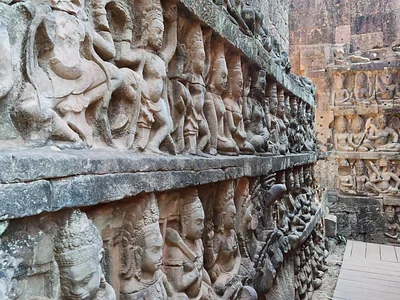
Just north of the Terrace of the Elephants in the 800-year-old city of Angkor Thom, the Terrace of the Leper King takes its name from the statue that stands atop it. Around 20 feet (6 meters) high, the grand platform stands out for the detailed carvings on its exterior and interior walls: kings, princesses, spirits, sacred snakes, and more.
12-Neak Pean
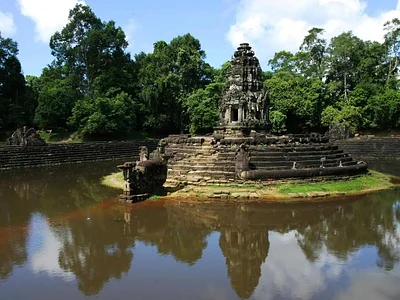
The tiny 12th-century Buddhist temple of Neak Pean (sometimes written Neak Poan or Neak Poun sits on a circular stone island in a square pool, framed by four more pools, all built on an island in the middle of a lake. The temple’s name means “entwined serpents.”
13-Pre Rup
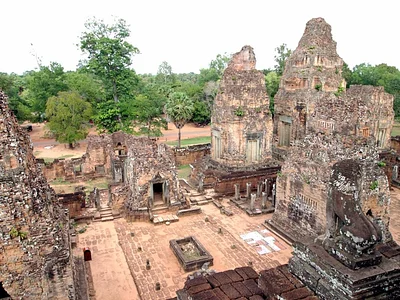
A favorite Angkor sunset spot, Pre Rup is a 3-tier mountain temple topped with five sanctuary towers. Built in 961 AD as a temple to the Hindu god Shiva, Pre Rup’s name means “turn the body,” and some believe it was used for cremations. Its warm brickwork and red laterite stone look beautiful at sunrise or sunset.
14-Banteay Kdei
Less visited than Siem Reap’s “big three” (Angkor Wat, Angkor Thom, and Ta Prohm), Banteay Kdei is a 12th-century Buddhist monastery that lies conveniently close to Ta Prohm and Srah Srang. The towering trees that overgrow the site add atmosphere, while it’s easy to imagine ancient monks praying and sleeping in the tiny cells as you stroll.
15-Kampong Phluk
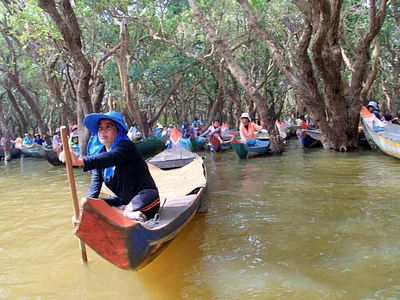
Perched on the floodplain of Tonle Sap Lake—the largest freshwater lake in Southeast Asia— Kampong Phluk is a floating community of around 3,000 villagers. Visit to see how the residents live—in stilted homes and depending on fishing as a livelihood.
16-Tonlé Sap
This great lake covering 1,000 square miles (2,600 square kilometers) is not only the largest body of fresh water in Southeast Asia, it’s also a UNESCO-designated biosphere due to its remarkable natural features. The flow of water in Tonlé Sap changes direction twice during the course of the year, expanding and contracting with the seasons.
17-Banteay Samré
A heavily restored 12th-century temple, Banteay Samré feels more like a citadel. The Khmer emperor Suryavarman II built the complex, which includes a hall, two libraries, a temple, a dry moat, and fringing walls. Though Banteay Samré is smaller than many other Angkor-era monuments, it boasts some impressive carvings.
18-Phimeanakas
At the heart of the Royal Enclosure—the remains of the royal palace complex in the city of Angkor Thom—Phimeanakas was the king’s private temple. Carved mainly from rust-colored laterite rock, with sandstone elements, it ascends in three stepped tiers that represent the Hindu sacred mountain, Mt. Meru. It once had a golden spire.
19-Baphuon
With shaded pavilions and elaborately carved stone pieces, Baphuon is one of the most magical temples in Angkor Archaeological Park, a UNESCO World Heritage Site. Set within the grounds of Angkor Thom, a huge 12th-century site that dwarfs even Angkor Wat in size, Baphuon attracts visitors with its reclining Buddha and dilapidated charm.
20-Srah Srang
Also known as the Royal Bath, Srah Srang is an artificial lake in the heart of the Angkor Archaeological Complex. Especially picturesque at sunrise and sunset, the 10th-century reservoir is also a popular lunch spot—the ornately-carved terrace and lush trees provide respite from a busy day of temple-hopping.
21-Kbal Spean
Nature meets ancient architecture at Kbal Spean, whose phallic symbols and religious imagery are etched straight into a stone riverbank. The site is in Phnom Kulen National Park, where visitors can spot carvings while hiking a riverside trail. With fewer crowds than the main Angkor Temples, here’s the chance to channel your inner explorer.
22-Ta Keo Temple
The absence of carving shows that Ta Keo, a sandstone mountain temple that stands almost 164 feet (50 meters) tall, was never finished. Started by Jayavarman V during the 10th century, the vast structure, with four corner towers around a central turret, would have been one of Angkor’s most impressive. It still offers sweeping views.
23-Angkor National Museum
Opened in 2007, this modern, interactive museum showcases Khmer civilization and the Angkor era. Eight different galleries put the period in context with artifacts gathered from sites including Angkor Wat and Angkor Thom. Topics covered include religion and belief, the great Khmer kings, the pre-Angkor period, and ancient costume.
24-Wat Bo
Among the oldest temples in Siem Reap, Wat Bo is a compact Buddhist temple best known for its beautifully preserved paintings. Dating to the 19th century, these images depict scenes from the Hindu epic the Ramayana, known in Cambodia as the Reamker.
25-Angkor Village Apsara Theatre
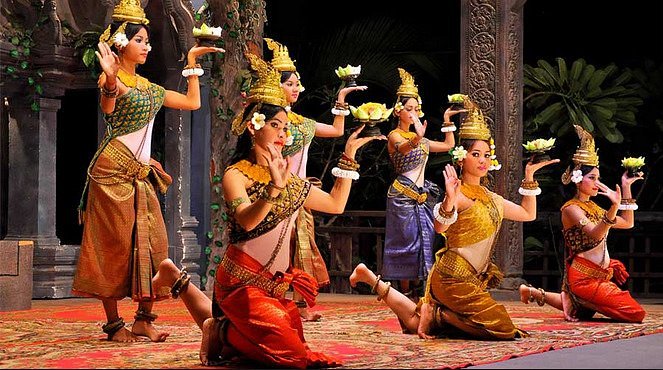
A large, air-conditioned wooden pavilion on the grounds of Siem Reap’s Angkor Village Resort, the Angkor Village Apsara Theatre hosts classical Khmer dance performances with a live orchestra. Shows typically include the graceful Apsara (nymph) dance and scenes from the Hindu epic known as the Ramayana, with a Cambodian-themed dinner.
26-BakongTemple
Often overlooked by visitors exploring Angkor Archaeological Park, Bakong is a 5-tier temple with its own unique charm. One of the earliest temples in the region, Bakong was built within a strict geometric matrix, a style recognizable in the later Angkor Wat. The temple grounds, home to multiple freestanding satellite temples, provide a welcome break from the crowds of nearby Angkor Wat.
27-Lolei Temple
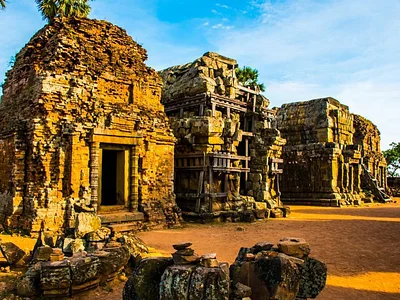
Yasovarman I, who would find the first city at Angkor, built this small brick temple in the late ninth century. It’s one of the Roluos Group, a cluster of temples about 12 miles (19 kilometers) from Angkor Wat. With its four crumbling brick towers, Lolei is similar to, but smaller than, the group’s best-known temple, Preah Ko.
28-Kravan Temple
A 10th-century Hindu temple, Prasat Kravan bucks the Angkor trend: It’s built from brick, not stone. The five brick towers may seem unimpressive from the outside, but it’s the carvings within that are the draw. Brick bas-reliefs here include Vishnu riding his sacred bird, Garuda, and Lakshmi, his wife, holding lotus flowers.
29-Wat Preah Prom Rath
Set back from the west bank of the Siem Reap River, Wat Preah Prom Rath temple boasts a history that may date back to the 13th century. However, everything to be seen here was built after World War II. Colorful statues and lush gardens in the heart of downtown offer the chance to see how Cambodian Buddhism is practiced today.
30-War Museum Cambodia
Refurbished in 2018, the 5-acre (2-hectare) War Museum Cambodia is devoted to the weapons of Cambodia’s many conflicts. The collection, which you’re allowed to handle, runs from tanks and fighter planes to small arms and rocket launchers. One room focuses on the landmines that have caused such suffering in Cambodia.
31-CambodiaLandmine Museum
Landmines left over from Cambodia’s many conflicts still kill dozens of locals a year. The Cambodia Landmine Museum, founded by former child soldier Aki Ra, shows the horrors of this national curse. The small, largely open-air museum reopened in January 2019 after a fire led to its closure.
32-Roluos Group
Carved Apsara dance across a cluster of temples at the Roluos Group, atmospheric buildings that mark the site of an ancient Khmer population center. Bakong Temple is the centerpiece, between Preah Ko and Lolei. While the Roluos Group is smaller in scale than the landmarks of Angkor Archaeological Park, it’s a fascinating place that’s rarely crowded.
33-Pub Street
Lined with bars, clubs, and restaurants, Pub Street is Siem Reap’s after-dark hotspot. Here, tourists and locals sip Angkor beer, purchase Cambodian treats from street vendors, get their feet rubbed at roadside parlors, and dance the night away. It can be crowded, loud, and a little wild, but for many visitors that’s precisely the draw.
34-Preah Ko Temple
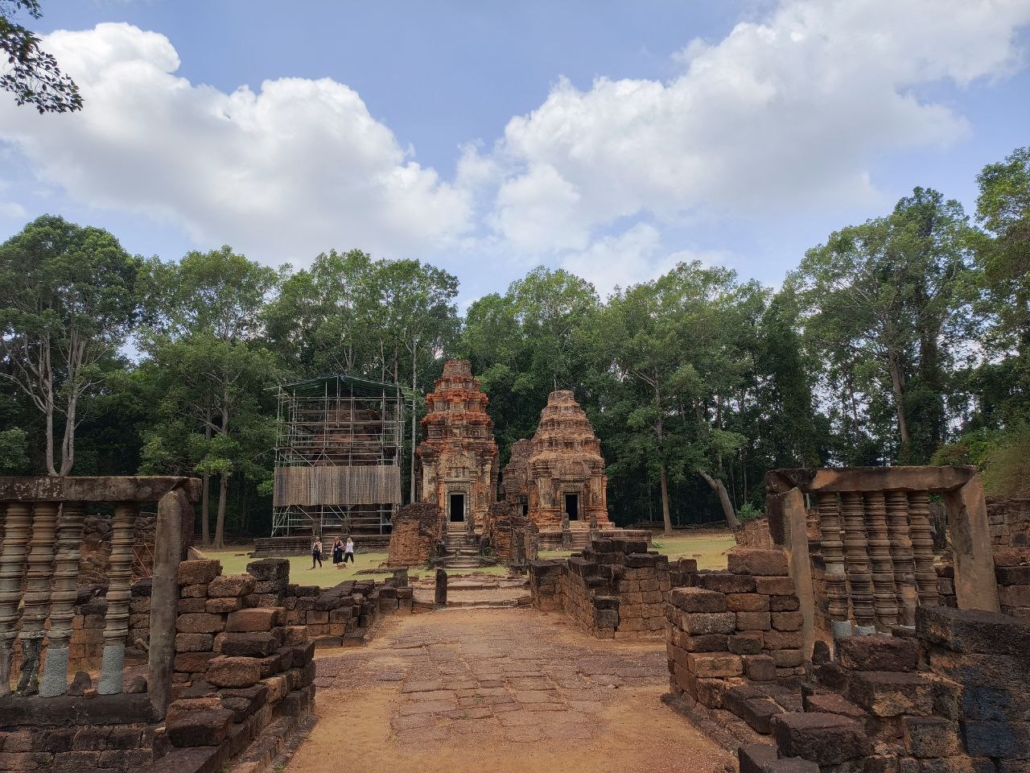
One of the Roluos Group, a cluster of temples surrounding an early capital of the Khmer empire, Preah Ko is a small brick-built temple with six sanctuaries. Indravarman I built it in the late ninth century and originally dedicated it to Shiva. Its name means “sacred ox,” and you can still see statues of Nandi, the bull that Shiva rides.
35-Phnom Krom Temple
South of Siem Reap and the major Angkor temples, hilltop Phnom Krom Temple (Prasat Phnom Krom) was built during the reign of Yasovarman I, who moved the Khmer capital to Angkor. Three ruined towers and an active monastery stand atop a hill with sweeping views across Tonlé Sap lake and the West Baray reservoir. It’s a popular sunset spot.
36-Wat Athvea
Believed to have been built during King Suryavarman II’s reign in the first half of the 12th century, Wat Athvea is one of several Hindu temples around Siem Reap that remain shrouded in mystery. Less visited than the nearby temples of Angkor, it’s a worthwhile detour for those looking to escape the crowds.
37-Baksei Chamkrong Temple
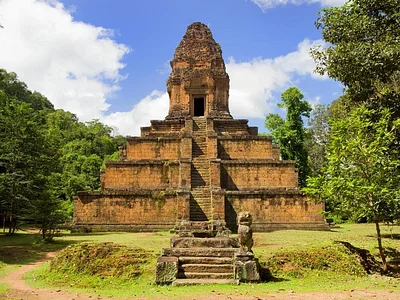
The 10th-century Khmer king Harshavarman I likely built the 43-foot-high (13-meter-high) brick pyramid temple Baksei Chamkrong in honor of his parents, who founded Phnom Bakheng. There’s not a great deal to see here, but the pyramid strikingly proportioned with four ascending tiers. The top sanctuary has finely detailed lintel carving and false doors.
38-Phnom Bok Temple
One of a set of three early hilltop temples built by Yasovarman I, who reigned 889–910, Phnom Bok Temple sits away from the main Angkorian monuments, on the route to Banteay Srei. It’s a small temple with towers, the ruins of two libraries, and the remains of a 13-foot-tall (4-meter-tall) lingam (phallic symbol). Most people come here for the views.
39-Angkor Night Market
Since it opened in 2007, Angkor Night Market has become one of Siem Reap’s most popular attractions. Cambodia’s first night market, the gigantic open-air venue has more than 240 shops, stalls, street food vendors, bars, and restaurants.
40-Old Market
With everything from handicrafts to fresh produce, Siem Reap’s Old Market (Phsar Chas draws a mixed crowd of locals and tourists. While there’s plenty of souvenir shopping to do here—look for hand-woven, colorful silks—the market is also a fascinating snapshot of daily life in Siem Reap, complete with vendors hawking deep-fried bugs.
41-Siem Reap Art Center
The Siem Reap Art Center Night Market is open from morning until late in the evening, but it is more of a night market than an art center. Close to the Old Market (Phsar Chaa or Phsar Chas), the site boasts a wealth of stalls selling crafts, souvenirs, the obligatory elephant pants, and snacks.
42-Angkor Centre for Conservation
With programs to rescue and breed endangered wildlife, the nonprofit Angkor Centre for Conservation of Biodiversity (ACCB has a mission to educate the local community and visitors alike. Knowledgeable staff share information about wildlife conservation and tend to rescue animals living in well-tended enclosures.
We provide you Lexus SUV car with speaking English driver.
Touring price for one days around Angkor Wat area is 50 USD for one car(4 Pax)
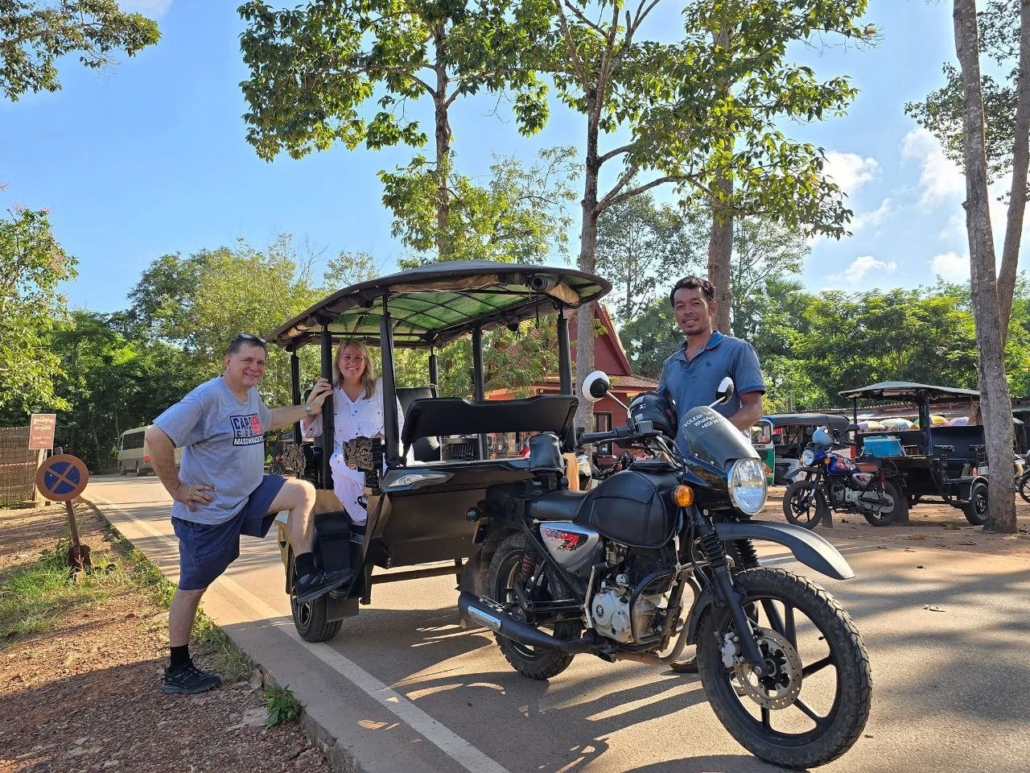
Touring price for one days around Angkor Wat area is 25USD By Tuk Tuk(2 Pax)
Booking your trip with Taxi Cambodia, we guarantee excellent services and safety for your traveling.
What’s included:
- All transfers in comfortable, air-conditioned Private vehicle for 1-4 pax
- Professional English-Speaking Driver
- Gasoline
- Parking fee
- Toll fee
- 24/7 local on-call support
Would you like to visit the above sites? Please book us.
Reserve now & pay later
Email: taxi.tom341@gmail.com
Booking WhatsApp: +85592652220
Gallery